

It seems that each time we are driving somewhere, another ranch has gone out of business. This time it was Bar QT Ranch, its stables – or what remained of them – sitting on a slightly overgrown patch alongside Route 32. When we got back, the cowboys were still talking about it.
“They no longer could afford their hay. It’s gotten crazy expensive these days.”
Hearing that sent a chill through my spine. I hope that we won’t be running out of hay any time soon! The cowboys continued their chat on the topic. Bruce replied:
“Wasn’t the Patriot Party voted in to keep hay affordable?”
“Those clowns never keep their promises,” said Jake. “Sure ain’t gonna vote for them again. My beer costs twice as much as last year too. But none of them seem to care. They think that they’re entitled to our vote no matter what.”
“Don’t ya think they’ll learn from their mistakes?” Bruce asked semi-rhetorically, while gazing deep into the sunset.
What the cowboys were describing seems to be a constant, regardless the country or the party in power. In the US, this scenario appears to play out every two years. In 2024, working class voters turned out by the droves to deliver the Republican Party and Donald Trump a landslide victory. Any election can be interpreted in many ways. It is fair to say, though, that the 2024 vote was largely driven by a desire to restore the old normal. Many voters longed for a return to life before rampant inflation hit and to a lesser extent, before crazy, concocted, divisive theories on race, gender, law enforcement, climate and immigration were forced down their throats. Donald Trump’s Republicans would deliver just that. At least that is what many voters expected.
The 119th Congress turned out to be prescient by being lame long before the lame duck session. It only succeeded at enacting a handful of major bills besides the usual suspects, such as reconciliation and appropriations. However, one topic is the exception to the rule: when the time is deemed ripe to add legislation that builds towards an all-surveilling digital control infrastructure, all of a sudden both the Congress and the Trump Administration could get things done. The latter made billion dollar deals with software giants like Oracle, SpaceXSI (formerly, XAI and Space X) and Palantir. A non-generic act the Republican Congress cared to redact and pass was the GENIUS Act. As we discussed before, that act lays the foundation for a broader adoption of corporate stablecoins, which would be legally the most seamless option to roll out programmable currency in the United States. That could be a stepping stone towards a more centralized digital currency, such as a Central Bank digital currency (CBDC), which Congress outlawed … through 2030 (Title 11, Section 1101 in H.R. 6644). Do they already have plans for 2031? It is a mere four years out.
It does not look like Congress will regain its appetite for the two remaining months. It never had much to begin with. However, one topic may be the exception: “child online safety,” with the potential passing of the Kids Online Safety Act (KOSA) in some shape or form. If passed, it may entail a “digital duty of care” clause, oddly similar to a proposed law that is currently working its way through the Australian Houses of Parliament.
Both legislative efforts have quite a bit in common: they are centred around the mantelpiece of “duty of care,” by which is meant that digital service providers will be legally required to design features in such a way that the product does not “cause harm to minors.” What is understood under the latter is slightly different in both countries, but both focus on banning topics that might cause minors to suffer all sorts of distress. The Australian version lists: e.g., pornography, content promoting disordered eating, hostility toward women, bullying/abuse, dangerous stunts, or material causing serious mental distress. While pretty exhaustive, the Australian version oddly does not ban content that promotes hatred against men, nor does it prohibit amplification of the scourge of toxic transgenderism.
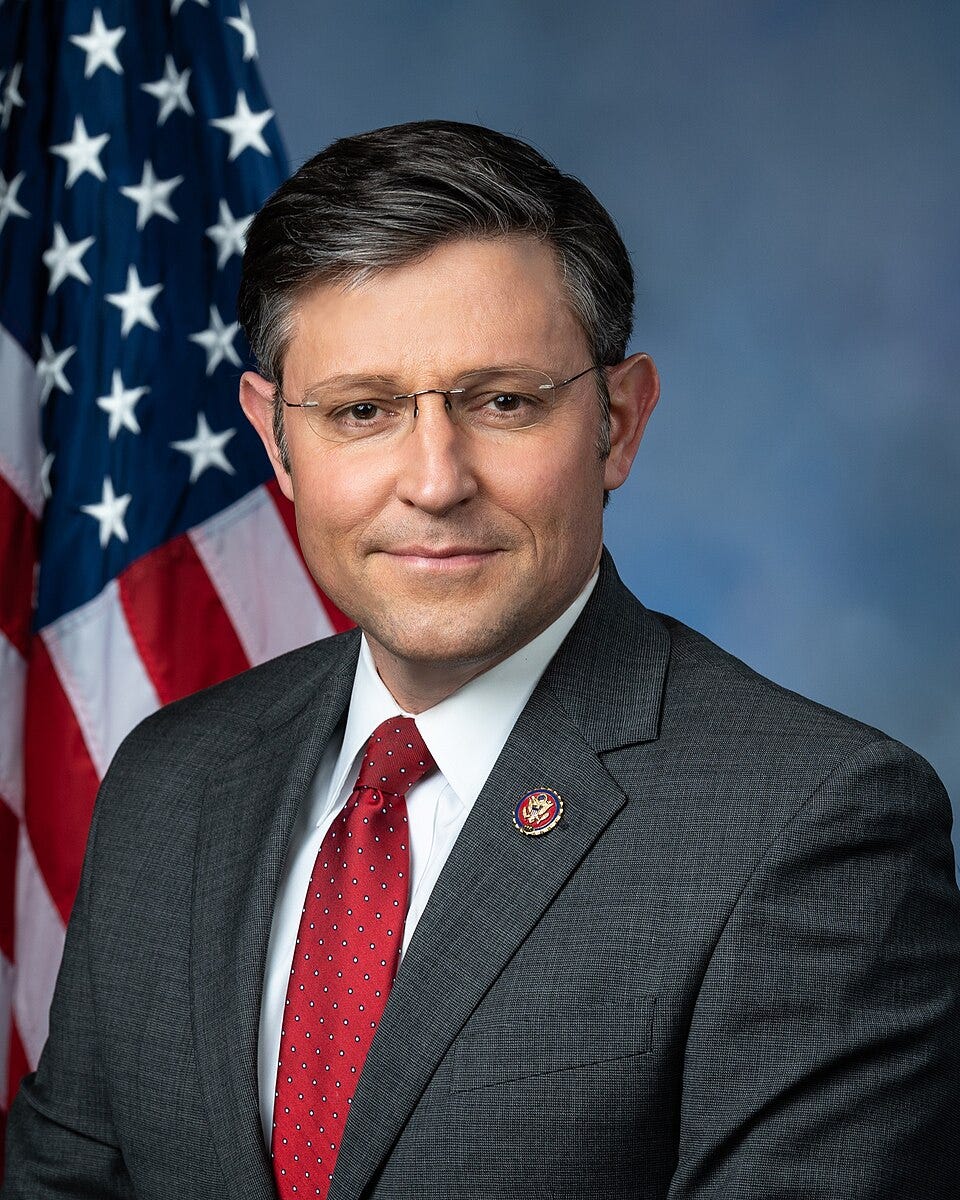
Both legislative proposals also, uncannily, share a parallel timeline. In the US, KOSA was first proposed in the Senate under the Biden Administration. However, House Speaker Mike Johnson refused to bring it to a vote for concerns that the “digital duty of care” might be “overly broad” and “lead to censorship of conservative voices.” The Bill was shelved in 2024, only to resurface two years later, in a Congress controlled by the same party, and without any of the concerns for free speech being alleviated. In Australia, the “Online Safety Amendment (Digital Duty of Care) Bill” was first tabled in 2024, but did not pass second reading. A combination of outcry from free speech advocates, along with the Australian government prioritizing minimum age limits for social media over “duty of care” put the bill at rest … only to resurface two years later in an even more worrisome variant, in Houses of Parliament dominated by the same majority government.
One thing the Australian and US versions of digital duty of care legislation do not have in common may be more surprising. In the US, “digital duty of care” is being pushed by a Republican Congress and are touted as a “conservative” effort “to protect children.” In Australia, the measure is promoted as a “progressive” action needed to “keep children away from ‘toxic’ online content.” The biggest difference between the Australian and US bills seems to be the rhetoric surrounding them. Depending on the acting government, the same substance can apparently be either “right-wing” or “left-wing,” depending on the sales juice poured on top. Admittedly, the Australian narrative is more nauseating then the US one. Australian proponents focus on things like the “toxicity of the online ‘manosphere.’” It would make much more sense if they focused on the toxicity of the trannosphere instead, which talks children into taking toxic substances like Lupron. Howbeit, infringement upon free speech and online liberty is never a good idea.
Republicans seem very keen to pass some version of KOSA while they have the majority. Unfortunately, with KOSA being the only “conservative” measure they show any enthousiasm for, voters have noticed. Neither KOSA nor any of the other handful of bills passed reduce inflation or gas prices and voters have sent Republicans packing from Congress. That is a fair reaction and an outcome well deserved for not delivering campaign promises. It remains to be seen if Republicans will learn from the 2026 election.
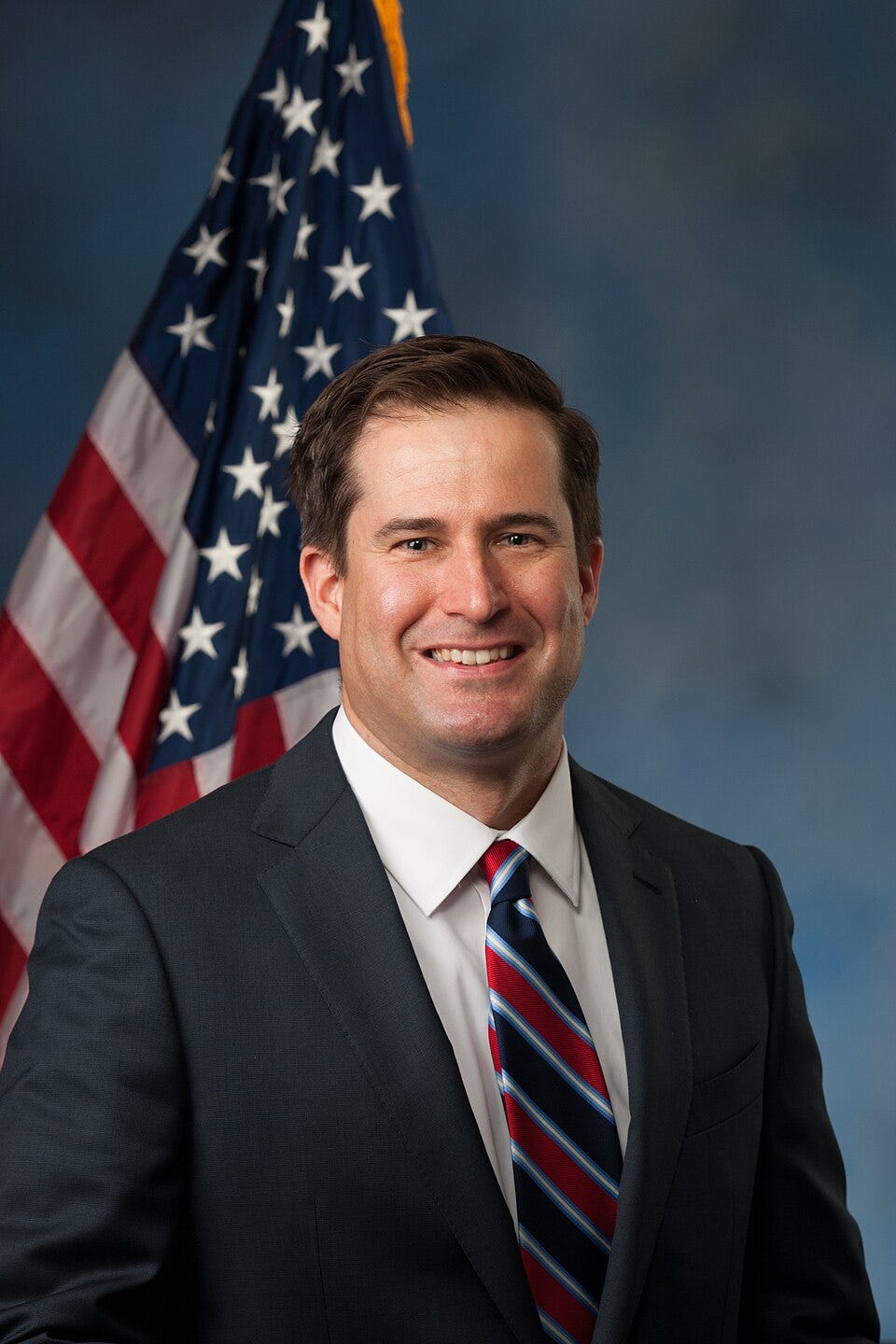
We already do know, though, that Democrats are not capable of learning from past mistakes either. After their 2024 loss, Massachusetts representative Seth Moulton was one of the few Democrats to analyze the situation correctly. He stated that the party had “lost touch with voters” by leaning in too heavily into identity politics. He also spoke out against biological males participating in female sports. However, he found himself soon whistled back by the party establishment, and his 2026 campaign proposed the creation of a “trans Bill of Rights.”
Democratic voters have not changed their opinions on such issues, though. Ballot measures in several predominantly blue states have highlighted that very convincingly. Voters in (blue) Colorado and (blue) Washington State passed measures to outlaw participation of males in female sports. Colorado voters also outlawed gender “transition” procedures for minors. Voters in California rejected a tax on billionaires, while in (now blue) Wisconsin they approved a constitutional amendment that bans government DEI. These are exactly the type of issues that thrust Republicans to victory in 2024.
If we thought that the Democratic leadership had learnt from these results, we would be mistaken. Washington State’s governor-elect vows to “challenge the ban on boys in girls’ sports in court,” while Rep. Ro Khanna (D-CA) commented soon after the election that “DEI is back.” It still remains to be seen what kind of measures a Democrat-led Congress will pursue. Since politicians seems to be living in bubbles where they are protected by a thick layer of insulation from their voters’ opinions, the most likely outcome is that Democrats will waste energy on impeachment theatre, will fight for two years to enact their “trans Bill of Rights” that alienates most voters, while still pushing digital ID and centralized digital currency and letting inflation soar to 15%. What that will lead to, is predictable, but apparently only to us “outsiders.”
Politics can still be summarized very well by the old adage:
“’T is blue or ‘t is red
that one another attack
yet that same dirt stack
is what ye will get.”
As much as technology now enables real-time accounting of every person’s online – and to some extent offline – activity with a centralized digital identity, there really is no reason to implement it. However, as politicians seem to be doing so no matter what, let’s reflect for a second how it could be used to our advantage. If we really have unhackable digital identity that can be evaluated in real time, why do we need to use it only for things like financial transactions and credit scores?
How about we use digital ID for voting? With digital ID being the ultimate layer of trust that can be verified in real time, we can perfectly restore democracy to its true glory. We no longer need democracy to be either parliamentary or representative. It can become direct. Let’s globally reform all Congresses and Parliaments into mere advisory functions: we elect officials into the lower chamber for the sole responsibility of drafting laws corresponding to an agenda put forward before the election. Likewise, we elect representatives into the higher house for the only task of checking that the legislative proposals from the lower house are consistent with existing law. If a text passes both chambers, we the people use our online ID to vote on the law itself. It will be interesting to see what a real democracy looks like. Votes on the continued existence of the United Nations, NATO, the European Union, or the organizational structure of the intelligence community all need to be held. They are long overdue. Something makes us believe that none of them will turn out in line with the beliefs in the elite bubble.
A little later, Bruce opened a beer next to the firepit. He said, still in a semi-reflective tone,
“Being able to admit mistakes is what makes us human. A bull that rams through a gate never regrets it. The higher up though, the more of that capability is lost.”
He sighed, took a sip and changed the topic: We’re still lucky we got these guys here.”
He concluded that while patting our noses. Yes, we horses are always reliable. Maybe we should turn the Capitol into a stable.