

From time to time, I take a walk to the very southernmost part of our pasture. It’s easy to get there. Sometimes, I would be greeted by Painted Hero, a pinto gelding from C Bar Ranch. We used to stick out heads together across the fence and then eat some of the same weeds. Happy days, which I long for. I hadn’t seen Painted Hero in a while and I was wondering what had happened to him, until I overheard our cowboys Jake and Hunter talk about him.
“Did ya hear C Bar lost their pintos?” Jake asked.
“Yeah, but I dunno why. What happened to them?”
“A police car drove past the ranch and the AI in one of their Stock cameras flagged the horses’ behaviour for ‘pre-crime.’ Apparently, they stomped their hooves too often. C-Bar had to turn them in.”
“What on earth is ‘pre-crime?’” was Hunter’s concluding rhetorical question.

Researchers have long tried to foretell criminal activity. In the late nineteenth century, Cesare Lombroso published L’Uomo Criminale, or The Criminal Man, a book in which he laid the foundations for what is now referred to as criminal anthropology. His main premise was that some people were “born criminals:” in his point of view, criminal activity was biologically determined and not the result of conscious decisions. With criminality supposedly being a hereditary trait in his world view, it then had to correlate with other biological features. His book listed a set of “stigmata” by which criminals could supposedly be identified, such as a low or sloping forehead, or an asymmetrical face. Those “stigmata,” he postulated, reflected individual cases of “evolutionary throwback” resulting in “savages:” humans who he deemed to be more “primitive” and closer to apes.
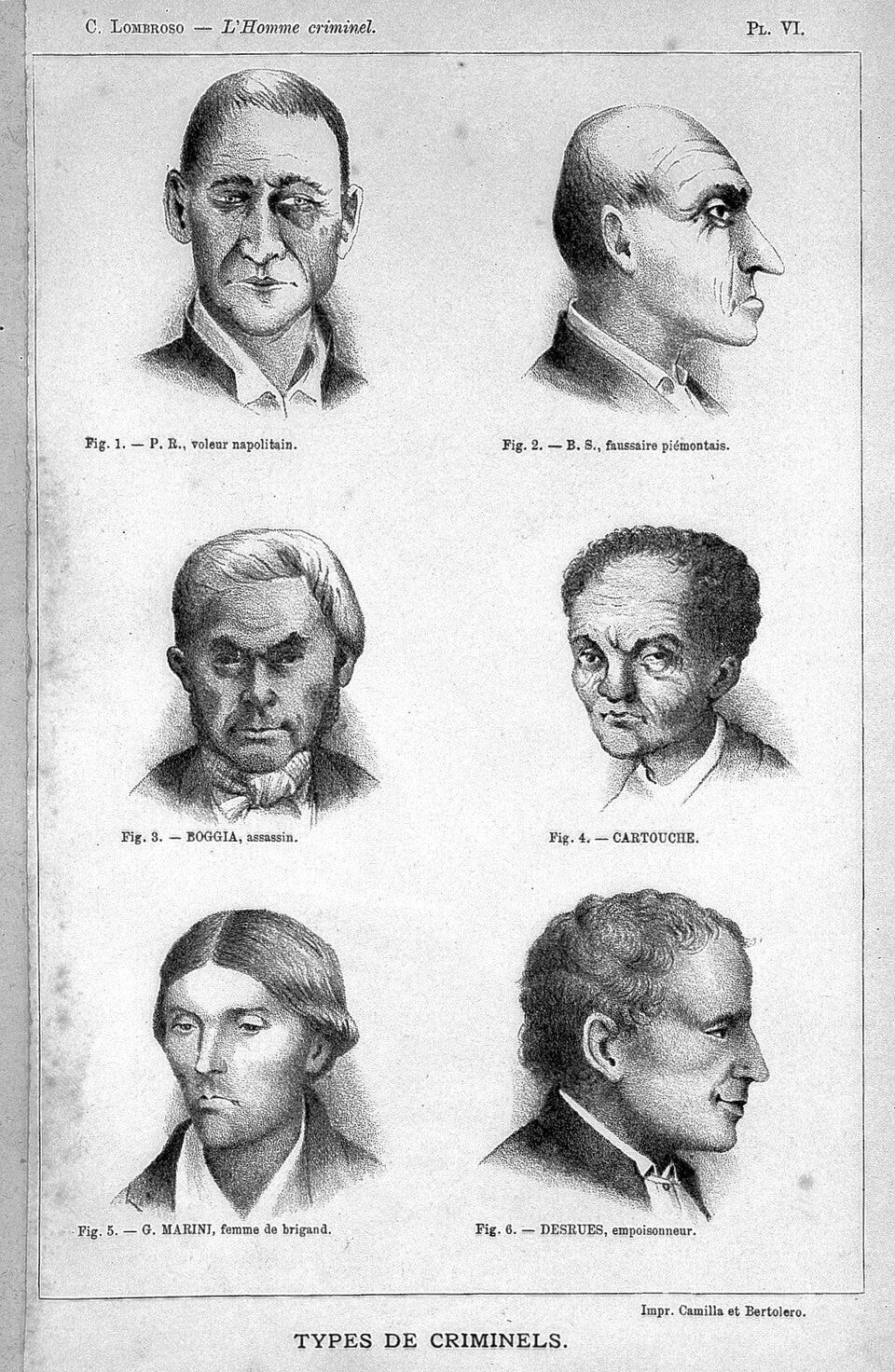
Lombroso’s work became highly influential in the early twentieth century. It paved the way for the Nazi’s “criminal biology.” They used this sort of rationale to justify implementation of “social defense” against “biologically inferior” persons, resulting in their forced sterilization, indefinite confinement in concentration camps and even execution. At the time the Nazis were deploying their demonic operation, Lombroso’s work was already being discredited elsewhere. Charles Goring, a British prison medical officer, published The English Convict: A Statistical Study, an extensive manuscript in which he compared physical traits of detainees with non-criminal control groups, such as students, military servicemen and hospital staff. He found no statistical correlation between physical traits and criminal outcomes at all. As a side note, Goring’s work met the highest standards of statistical analysis. He collaborated with Karl Pearson, a statistician whose work was foundational in multivariate analysis. Some of Pearson’s methods are still in widespread use today.
Hopefully, most will agree today that it is wrong to classify people and to label them “pre-criminals” merely for who they are, for their physical features. Most will also agree to the notion that it should be illegal to detain people who have not committed a crime. The horrors committed by the Nazis in the Second World War empowered a postwar return to deeply enshrined universal human rights. At least for half a century, that is.
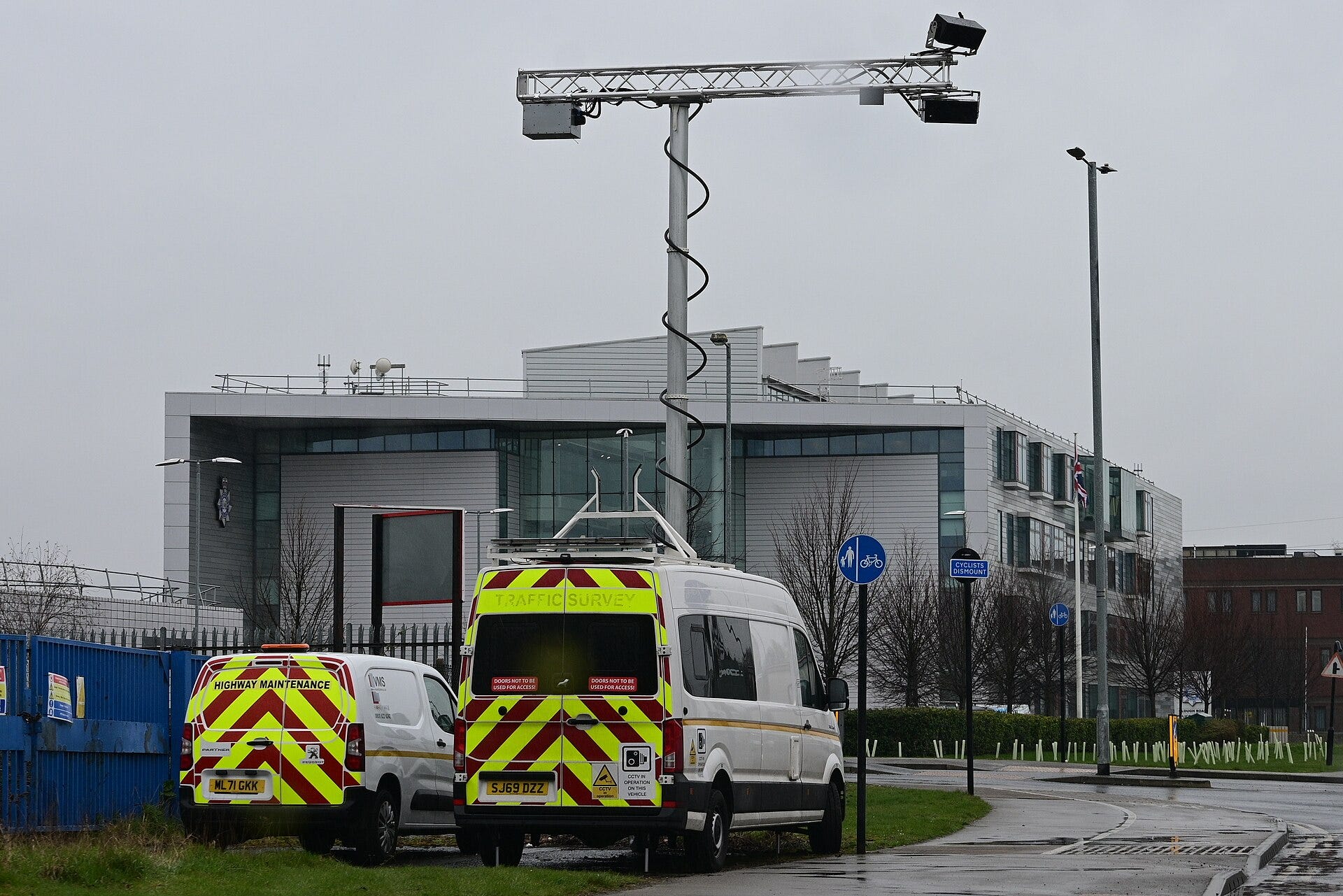
In the second half of the twentieth century, there was a widespread consensus that every person should be treated innocent unless proven guilty and that a conviction can only be the result of an actual crime. In more recent times, though, the notion of “pre-crime” has resurfaced in academic and intelligence circles. Presently, AI enhanced cameras are being marketed to law enforcement agencies that can supposedly “predict criminal activity.” The New York City Subway announced with pomp and circumstance that it will do a system-wide rollout of such cameras, because “AI is the future” and it will allow MTA Police to “respond before waiting for something to happen.”
The MTA has not yet selected a vendor, nor has it formally announced the full scope of the AI it intends to deploy. We can have a look, though, at some deployments of cameras with AI enabled behavioral analytics in correctional facilities. The Sharjah prison in the United Arab Emirates recently boasted that it can predict criminal behaviour from features like facial expression, gait and posture. When predicted, it can then act to “pre-empt” the crime. Western companies in the behavioral AI space are more reticent in their public statements, but some do state that they use gait for target identification and flag erratic behaviours, such as “rapid gestures” as a precursor to an incident (see e.g. VOLT.ai, who see transit systems as one of their core markets). If deployed system-wide indeed, we could soon be met with police on a subway train for having had a lively discussion on the platform.
The “scientific consensus” was once that real world data “supported” declaring persons “pre-criminals” based on biological traits only. Howbeit, plenty of evidence was available to refute that claim and therefore, such practices gradually disappeared from the planet. With that knowledge in mind, it is all the more appalling to hear some “scientists” claim that features like gait or posture should be used to label people in images “pre-criminals,” while suggesting that doing so would “pre-empt crime.” Gait and posture are biological traits. If we agree that other biological traits like facial features are in no way an indicator of criminal intent, why would gait or posture be any different?
The development that some theories widely seen as disproved until two decades ago are resurfacing, is quite deplorable. Unfortunately, the concept of using hereditary biological features to predict behaviour does not stand alone in that sense. Lobotomies (of the brain) were once deemed to be “underpinned” by evidence according to the “scientific consensus.” Yet ample evidence to the contrary existed, and we went on to ban such procedures altogether. That notwithstanding, these days, even some doctors and scientists advocate for genital lobotomies on young children, which leave them maimed for life. As is the case for brain lobotomies, ample evidence exists that children are not “happier” for having their genitals mutilated off (for instance, a recent study by Straub et al. reported a twelve times higher suicide rate in children after receiving such surgeries). It is sad to observe that society is capable of slipping back almost a hundred years on the moral scale.
“Pre-crime identification” should at best be regarded a pseudo-science, yet its deployment is not limited to image analysis, nor to the use of biological traits such as gait. In fact, many applications have been reported in which law enforcement have tried to use models that predict likelihood of crime based on data that may also include background, information on the neighborhood, social media posts, and more. There is one problem with all of those approaches, though: false positives. No algorithm exists that can perfectly predict criminal behaviour from any set of such features, let alone forecast future criminal activity.
What deployment of “pre-crime” detection algorithms could lead to, was foreseeable, but that did not stop law enforcement agencies from using them. In an effort to reduce delinquency rates in crime-ridden Chicago, the Police Department used algorithms to build a “Strategic Subject List,” which was nothing less than a blacklist of citizens labeled “pre-criminals.” Robert McDaniel was one such denizen flagged as a “high-risk individual.” He received frequent police visits. The conspicuous mentoring by the police led local gangs to believe that he must be an informant. He was shot twice in consecutive assassination attempts. McDaniel’s statements that the surveillance was in fact a catalyst of the violence against him eventually led to the Strategic Subject List being discontinued in 2019.
More recently, Florida’s Pasco County implemented an “at-risk youth program,” which assigned young citizens risk scores derived from their known prior contacts, associations, and sometimes school or other data. The result was again a blacklist —in everything but name— of citizens deemed “likely to offend,” many of which minors. Listed teenagers received repeated home visits by deputies, sometimes late at night. Families described these visits as “harassment.” Eventually, some sued the county and the program was ended as part of a settlement around 2024.
In spite of all of these negative examples, governments around the world are not yet ready to give up. Australian authorities have recently launched the Step Together programme, a government service that encourages citizens to snitch on teenagers and young adults and report them for “behavioral changes and anti-authoritarian views,” which could be “early indicators of radicalization.” Children as young as the age of ten have reportedly been subjects. An official Step Together podcast mentions Jordan Peterson as a podcaster active in the “manosphere” that parents should be on high alert for.
Step Together is far from the only Australian government effort to “pre-empt crime.” The Australian Office of National Intelligence has launched its own programme, named AVERT. For the bargain of A$365,000, the ONI wants researchers to develop an AI model for the “automated classification of extremist beliefs and the flagging of possible escalations into violence.” The project will map citizens’ opinions, as well as which actions they deem justified, to then predict the probability that they will follow through on those actions. In other words, the Australian ONI still thinks that “pre-crime” algorithms can “pre-empt” real-world violence. As we discussed before, Australia has recently witnessed such violence in the form of the Bondi Beach attacks. Algorithms would not have stopped them, but acting on real-world evidence of adherence to a jihadi terror cell might well have. Instead of increased digital surveillance, a tighter immigration policy and more thorough vetting of immigrants from countries that harbour radical islamism, are other avenues that Australia should take to prevent similar acts in the future.
Hopefully, it is still the “scientific consensus” that we should not use biological traits to predict crime. The same may not be as obvious for actions and gestures. However, social interaction and its relationship to human behaviour is a very complex phenomenon. Just like climate or the spread of contagious diseases, we should not pretend to have models that can forecast the future as long as we don’t have any that can accurately predict the present. In the case of “pre-crime,” the use of such models has led to real world harm, without bringing any real-world benefits. In fact, a thorough review of the scientific literature by Brouillette-Alarie et al. agrees. It states that:
“[...] no included study evaluated true predictive validity (i.e., the ability to forecast future violent extremist outcomes based on prospective risk assessment). This represents a significant evidence gap.”
Brouillette-Alarie et al., Campbell Syst. Rev., 21 (2025), e70080.
It should be quite clear from this statement that the deployment of “pre-crime” models has not led to “pre-emption” of crime anywhere, but their use in law enforcement contexts has unnecessarily upset lives and ended careers. “Pre-crime” models are neither safe, nor effective preventative measures. We should implement a moratorium on their deployment. In fact, we maybe could start by trying to get the basics of AI use in law enforcement right. How about facial recognition? China touts to have “eliminated crime” by having AI-enhanced facial recognition cameras everywhere.
Other countries do not seem to be able to reproduce China’s success, though. They report false positives left and right. Maybe China is only successful by jailing a “tolerable” rate of innocent citizens? In the United States, several lawsuits are ongoing about false identification by AI or AI-assisted cameras. For instance, Alain Osorio spent two weeks in a Kentucky jail after AI falsely identified him as the culprit in a check fraud case. If AI models are still not reliable enough for the basic task of facial recognition, how can anyone advocate to use them to “prevent” acts that haven’t even been committed yet?
Now is a good time to reaffirm basic human rights and strengthen the due course of law. The latter is only possible with unbridled commitment to habeas corpus, due process and the presumption of innocence. Investigations that respect those principles surely take longer than models to classify someone as a criminal, but that price we must be gladly willing to pay. Governments must also explicitly be prevented from maintaining any sort of blacklists of innocent citizens. Let’s make the use of such lists and tools felonies with steep penalties.

A few weeks later, we visited C Bar. Their ponies had returned to the pasture. The mere threat of legal action, along with a call from our representative Vance, had convinced our law enforcement to stop pursuing the case. The “pre-crime” programme was dropped altogether.
I fully empathize with Painted Hero. It is natural horse behaviour to kick one leg into the soil. Most of all so when humans make us wait… It has nothing to do with crime. Whatsoever.